Japanese · Katakana
Katakana chart.
All 46 katakana, then the marks and combinations. Tap a letter to hear it and see how to say it, with a word from Misu’s Japanese course. Then test yourself.
- 46 letters
- Tap to hear
- A quick quiz
The 46 katakana
Dakuten and handakuten
Two small marks change a letter’s sound: two dots turn カ (ka) into ガ (ga), and a small circle turns ハ (ha) into パ (pa). The dots work on the k, s, t and h rows.
With a small ャ, ュ or ョ
Small ャ ュ ョ work just as in hiragana: シャ is one beat, sha. A full-size シヤ would be two, shi-ya.
For sounds from other languages
A small ァ ィ ェ ォ after フ makes one beat: fa, fi, fe, fo. You’ll also meet ファイル (file) and カフェ (café).
Long vowels and pauses
holds the vowel before it one more beat
コーヒー
kōhī · coffee
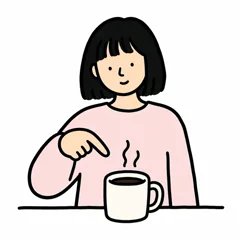
ー adds a beat of the vowel before it: コ-ー-ヒ-ー is four beats. Hiragana adds a vowel kana instead, as in おかあさん (mother).
a beat of silence before the next sound
サッカー
sakkā · soccer
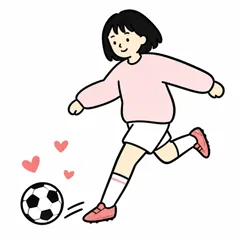
English words with a short vowel before k, p, t or d often gain ッ: bed is ベッド, net is ネット.
Katakana that look alike
Tap one to hear it and see how to say it.
-
Check the angle: シ’s long stroke is written upward and lies flat; ツ’s is written downward and stands steep.
-
ソ goes with ツ, and ン with シ: the same directions, one short stroke fewer.
-
ク, ケ and タ (ta) look alike. ク’s top line bends down at its end, ケ drops a long stroke from the middle, and タ adds a tick inside.
-
ヌ’s short stroke cuts right through the long one. In ス (su), it only kicks out from it.
-
コ is a box open on the left. Close it and it’s ロ (ro); stretch the bottom line out and it’s ユ (yu).
-
ワ is ウ without the tick on top. Take away ワ’s short left side too and you have フ.
Quiz
Test yourself.
15 katakana, one at a time. Pick the kind of question, then tap your answer, or press 1 to 4.
In the Misu app
Learn katakana as flashcards.
Misu’s Katakana deck is 52 flashcards: every letter, the marks that change their sounds, the long-vowel bar and the look-alikes. Each one has its sound, a tip, and a word from the course with its picture.
Take it after Hiragana: about four days at 15 new flashcards a day. Then Japanese Foundations uses katakana from its first lesson.
Get MisuQuick answers
How many katakana are there?
46. Two small marks, ゛ and ゜, give 25 more sounds, like ガ (ga) and パ (pa), and a small ャ, ュ or ョ makes 33 combinations, like キャ (kya). Katakana also has a few combinations for sounds from other languages, like ファ (fa).
What is katakana used for?
Mostly for words from other languages and foreign names: コーヒー is coffee, アンナ is Anna. It also writes animal and plant names in science books, zoos and shops, and adds punch, as ウソ! (No way!) does in chats and comics.
Should I learn hiragana or katakana first?
Hiragana. It writes the grammar in every sentence, and many katakana come from parts of it: drop the little stroke on the right of か and you have カ.
How long does it take to learn katakana?
A few days. Misu’s Katakana deck is 52 flashcards, about four days at 15 new flashcards a day.
What is the difference between hiragana and katakana?
They write the same sounds: か and カ are both ka. Hiragana is curved and writes Japanese words and grammar; katakana is angular and writes words from other languages.
How do you write a long vowel in katakana?
With the bar ー, which holds the vowel before it one more beat: コーヒー (coffee) is four beats, コ-ー-ヒ-ー.
Learn katakana in Misu.
Misu’s Katakana deck: every letter with its sound, a tip and a word with its picture.
Get Misu